Every glamping listing looks dreamy in the photos: string lights, a steaming mug on the deck, mist over the lake. But once you start comparing options, the real question appears quickly. Should you book a glamping tent, a geodesic dome or a solid cabin? That choice shapes both your comfort and your budget more than almost anything else about the trip.
A canvas tent, a dome and a cabin behave very differently in rain, heat and cold, and their nightly rates can vary widely. In this guide, we break down what each stay type really offers, how to match it to the season, what you can expect to pay per night, which amenities to confirm before booking, how to pick the right setting, and when to reserve. By the end, you will know exactly which option fits your trip.
Glamping Tent, Dome or Cabin: What Each Stay Type Really Offers
A glamping tent is the closest you can get to sleeping outdoors without giving up a real bed. Canvas walls let you hear the wind, the rain and the birds, and many tents come with wood stoves for chilly evenings. The trade-off is sound insulation: you will hear your neighbors, and they will hear you. If atmosphere is what you are after, nothing else comes close.
What domes and cabins do differently
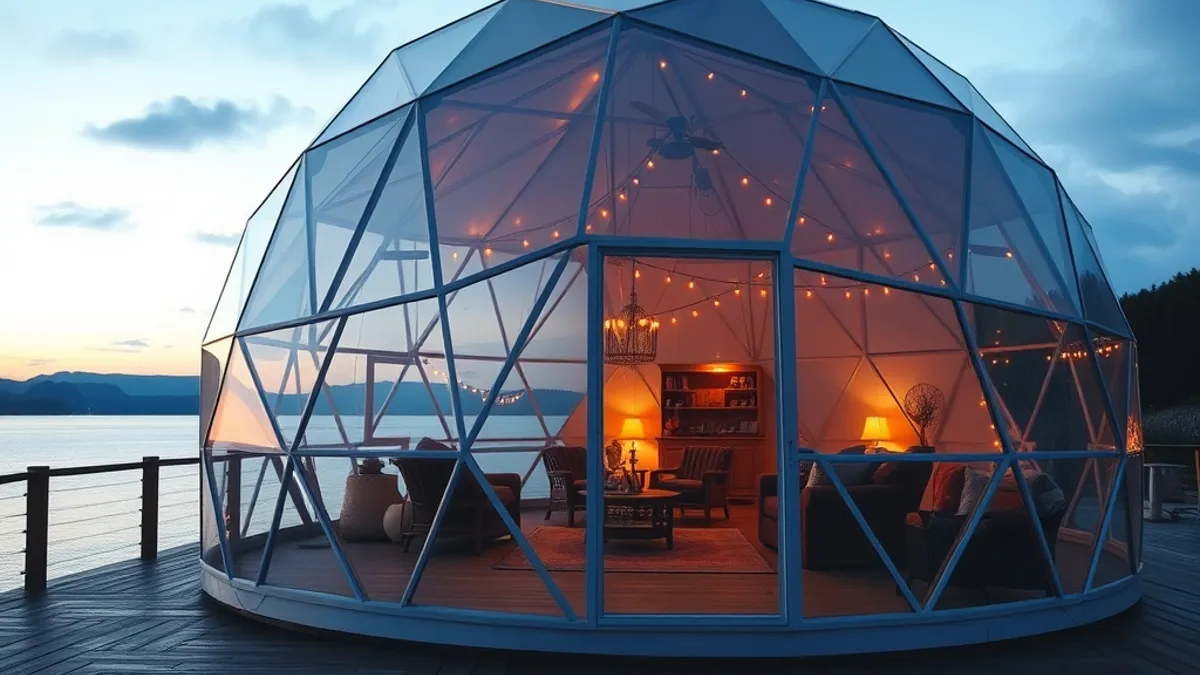
Geodesic domes are built for views. Transparent panels give you panoramic scenery by day and stargazing from bed at night, and the circular footprint takes up little space, so sites often place them in dramatic spots. The curved shape also feels surprisingly roomy inside, though storage can be limited compared to a square room.
Cabins are the most hotel-like option of the three. You get solid walls, a private bathroom, proper heating and often a small kitchen, which makes them the easiest choice for longer stays or travelers who want a predictable, comfortable base. The downside is that you lose some of the “sleeping in nature” feeling that draws people to glamping in the first place.
A simple way to decide: pick a tent for atmosphere, a dome for views, and a cabin for full comfort. Once you know which of those three matters most to you, the rest of the decisions get much easier.
Match Your Stay Type to the Season and Weather
Season is the factor most first-time glampers underestimate. The same tent that feels magical on a warm June night can be miserable in a cold snap, so match your stay type to the weather you are realistically going to get, not the weather in the marketing photos.
Canvas tents work best from May to September in most temperate regions. Once nighttime temperatures drop below 10°C, even a wood stove struggles to keep canvas warm, because the thin walls leak heat fast. Domes, on the other hand, handle wind and snow far better than tents, which makes them a solid pick for shoulder-season trips in April and October. Cabins are the only safe pick for genuine winter trips or stays in storm-prone coastal areas, where solid walls and proper heating matter most.
- Transparent-panel domes in high summer: they can overheat above 25°C without shading, so only book one for peak summer if the site offers shade structures or air conditioning.
- Wood stoves in tents: ask whether firewood is included or sold on site, and whether the stove keeps burning overnight or needs refueling before dawn.
- Shoulder-season perks: April and October trips often mean fewer neighbors, quieter trails and easier last-minute availability than mid-summer weekends.
If your dates are fixed and the forecast is uncertain, lean toward the more weatherproof option. A dome in April usually beats a tent in April.
Budgeting: What Each Option Costs Per Night
Glamping prices vary more by structure type than most travelers expect, so it helps to know the typical ranges before you fall in love with a listing. A tent and a dome on the same property can sit in completely different price brackets, and the difference rarely shows up in the photos.
Entry-level glamping tents typically run $100-200 per night in most destinations. That usually gets you a furnished canvas tent with real beds and access to shared facilities, though what counts as “entry-level” shifts with the region. Luxury domes and cabins typically range from $250-600 per night, and premium locations, think clifftop domes or lakeside cabins with private hot tubs, sit at the top of that range. Prices also climb sharply for weekend dates in high season, especially around holidays when availability is tight.
- Shoulder-season savings: dates in April and October can cut rates by 20-40% versus peak, often with the same structures and views.
- Minimum stays: many sites require 2-3 nights on weekends, so a two-night trip may actually need to be booked as three, raising the real cost.
- What the rate usually covers: bedding, linens and basic cooking gear are typically included, but firewood, hot tub use or extra guests often cost more.
Before comparing listings, multiply the nightly rate by the true number of nights you must pay for, including any forced minimum stay. Then add the extras that are not included in the base rate, since firewood and hot tub fees can add up over a long weekend. That final number, not the headline price, is what your trip really costs, and it is the figure you should use when weighing one site against another.
Comfort Checklist: Bathrooms, Heating and Amenities
Bathrooms are the detail that catches the most glamping first-timers off guard. Tents and domes usually share bathroom facilities with other guests, while cabins almost always include private bathrooms. If a shared shower block at midnight sounds unappealing, either upgrade to a cabin or filter listings specifically for en-suite tents and domes, which some sites do offer at a higher rate.
Heating and cooling deserve equally close attention. Wood stoves suit spring and autumn nights beautifully, but they need someone to reload them, so ask whether the host provides enough firewood for the whole stay. Once daytime temperatures climb above 25°C, air conditioning or at least good shading and fans matter far more than a stove. And remember that domes with transparent panels can turn into greenhouses in summer heat.
Remote sites add another layer to the checklist. If the nearest restaurant is a half-hour drive away, a kitchenette or breakfast service stops being a nice extra and becomes essential. Before you book, run through the practical details:
- Ask whether bedding is real duvets or thin sleeping bags, and whether extra blankets are provided for cold nights rather than sold on site.
- Check how lighting works after dark: solar-powered lamps that dim by midnight are charming for one night, frustrating for four.
- If you plan to work remotely, ask for the actual measured Wi-Fi speed and whether the signal reaches your specific tent, not just the main lodge.
- Confirm whether there are outlets inside the unit for charging cameras and laptops, since some canvas tents only offer power in the shared building.
- Find out if towels, soap and drinking water are included, because remote sites sometimes expect you to bring your own.
Location and Setting: Choosing Where Your Glamping Tent Stays
The setting you choose shapes the whole trip more than any amenity list. Lakeside and forest sites suit tents and domes best, because the whole point is immersion: waking up to birdsong, stepping out onto grass, hearing the wind in the trees. If your priority is scenery from bed, a hilltop site maximizes dome views, especially at sunrise and after dark.
Coastal locations are a different story. Sea wind is relentless, and canvas tents suffer in it, so coastal sites need wind-rated structures, which favors domes and cabins over tents. If you have your heart set on the ocean, ask the host directly how their units handle gusts before committing to a tent.
Think about what you will actually do each day
A stunning site in the wrong place can quietly ruin your plans. Check the driving distance to the trailheads, towns or beaches you actually intend to visit, not the ones in the photos. A dome two hours from the trail you booked the trip for means long daily drives and less time to enjoy your stay.
Access matters more than you think
Remote sites may require a rough access road, sometimes with gravel, potholes or a steep final stretch. If you are renting a small city car, that last kilometer can be stressful or even impossible. Confirm vehicle access before booking, and ask whether there is parking right at your unit or a walk with luggage involved. Hosts answer these questions gladly, and the answers often decide between two otherwise similar listings.
Booking Timing and How to Spot a Quality Site
Good glamping sites are small, often with only a handful of units, so the best ones sell out long before a comparable hotel would. A site with four or five tents cannot absorb demand the way a hotel with a hundred rooms can, which means timing your booking and vetting the site carefully are the two things that separate a great trip from a soggy disappointment. Here is how to do both:
- Book 2-4 months ahead for peak-season weekends. Small sites have few units, so a single busy weekend can fill completely well before summer arrives.
- Book 4-6 months ahead for holiday periods. Long weekends and school holidays sell out first, and popular domes and cabins are often gone before shorter trips are.
- Read recent reviews specifically about weather performance. Search reviews for mentions of leaks, condensation and heating complaints, since these reveal how a unit holds up in real rain and cold, not just in staged photos. Pay attention to reviews from the most recent season, as older complaints may already have been fixed.
- Study the photo gallery closely. Detailed shots of interiors and bathrooms tell you far more than polished exterior hero shots; if there are no bathroom photos at all, treat that as a warning sign and ask the host for pictures before you pay.
- Ask hosts about cancellation terms before committing. Many glamping sites require minimum stays on weekends and holidays, which makes a strict cancellation policy an expensive risk if your plans might change. Get the terms in writing rather than relying on a listing description.
One extra habit pays off: message the host with two or three specific questions before paying. Ask about anything the listing leaves vague, such as road access for your vehicle or how the unit is heated. The speed and detail of the reply tells you a lot about how the site is run, and hosts who answer thoroughly usually maintain their units just as carefully. Hosts who dodge simple questions rarely improve once they have your money.
Wrapping Up Your Glamping Choice
Every glamping listing looks dreamy in photos, but the stay type you pick shapes the whole trip. The short version: tents suit fair-weather atmosphere seekers, domes suit view lovers, and cabins suit all-season comfort. If you remember nothing else, remember the three factors that decide the right pick: your budget, the season you are traveling, and whether you need a private bathroom or can happily share one.
Once you have matched the stay type to those three things, the rest comes down to logistics. Book early for peak-season dates, read recent reviews for weather-related details like leaks, condensation and heating, and confirm cancellation terms before committing to a long minimum stay. Get those details right, and that canvas wall or panoramic dome panel delivers exactly the experience the photos promised. If this guide helped you sort tent from dome from cabin, leave a comment with your own glamping pick or share the article with a friend planning a trip.